Questions from Applicants, Match 2027: The ERAS Token, the ERAS Application, and the Pathway 1 Timeline
July 16, 2026



Questions from Applicants · Match 2027
The ERAS Token, the ERAS Application, and the Pathway 1 Timeline: How It All Fits Together
A structured walkthrough of the three systems every international medical graduate navigates in the 2027 cycle, anchored to the official ECFMG, AAMC, and NRMP calendars.
The Question
“Since I’ll be applying through Pathway 1, I’m a bit confused about the timeline and the different steps, especially the ERAS token, the ERAS application, and how everything fits together. Could you walk me through it?”
Submitted by an IMG preparing for the 2027 Main Residency Match. Shared with permission and anonymized.
The Short Answer: Three Systems, One Deadline Structure
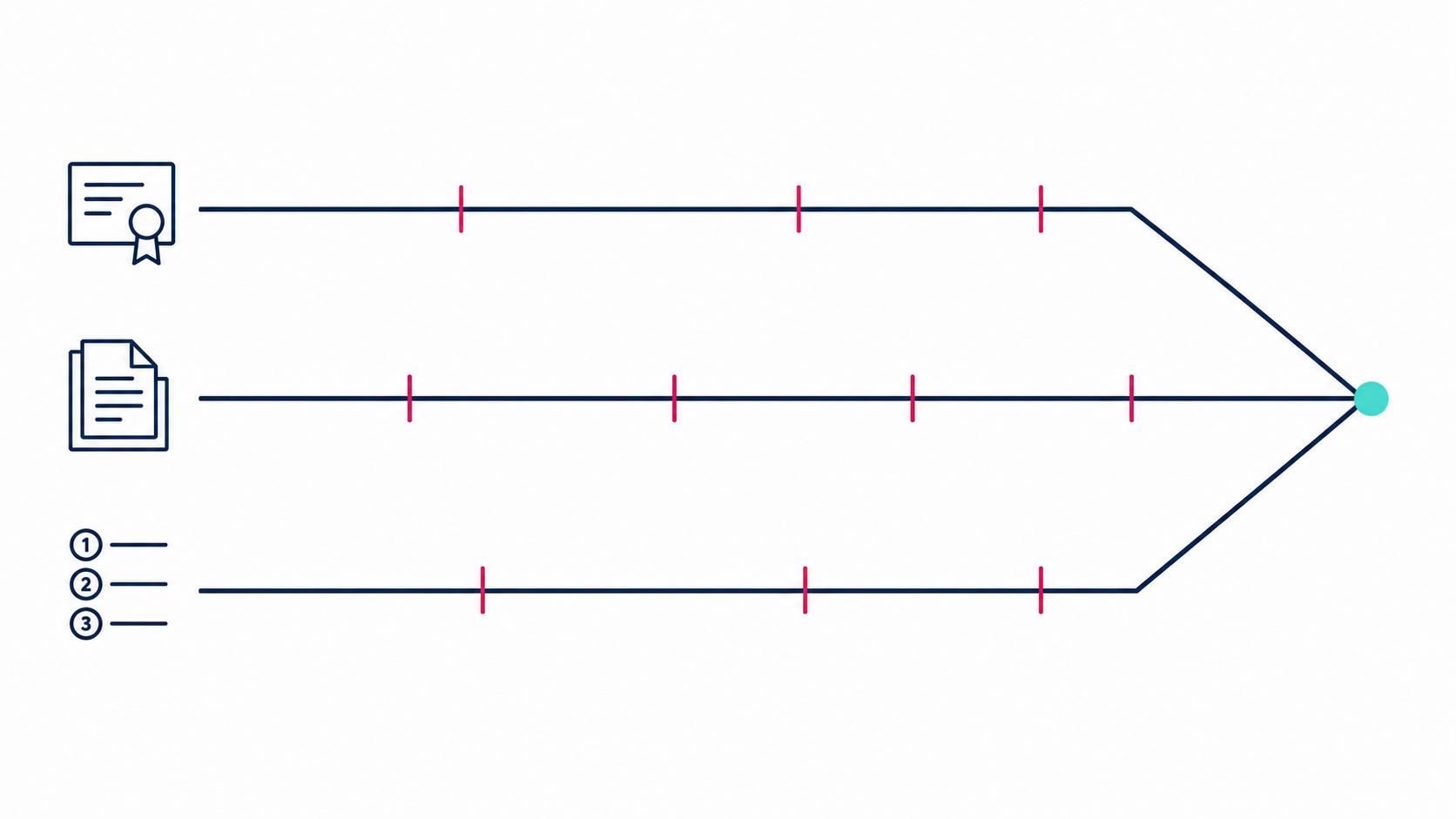
This question comes up every cycle, and the confusion is structural, not personal. An IMG in the 2027 Match is actually working inside three separate administrative systems at the same time, each with its own portal, its own fees, and its own deadlines. They intersect at defined points, but no single organization runs the whole process, and ECFMG Pathway 1 is only one lane of it. Understanding which task belongs to which system resolves most of the timeline confusion on its own, and it is the same structural logic we map in our overview of the full residency match cycle.
ECFMG, through its MyIntealth platform, is the certification track. It verifies your medical education, processes your Pathway 1 application, receives your OET Medicine scores, and issues the ERAS token that unlocks the application season.
The AAMC, through MyERAS, is the application track. This is where your experiences, personal statement, letters of recommendation, program selections, and signals live. Programs read your file here.
The NRMP, through the R3 system, is the placement track. It registers you for the Match, collects your rank order list, runs the matching algorithm, and releases results during Match Week.
What the ERAS Token Is, and Why It Comes First
The ERAS token is a one-time access code, valid for a single application season, that ECFMG issues to international medical graduates for a non-refundable $185 fee. For the 2027 cycle, tokens became available on June 24, 2026 through the ERAS Support Services section of MyIntealth. You purchase the token from ECFMG, then register it on the AAMC MyERAS website. That registration step is what creates your 2027 application; without a token, the MyERAS portal is closed to you. The full request procedure, from verifying your MyIntealth account through entering the code at MyERAS, is documented step by step in our companion guide, ERAS Token 2027: How IMGs Get One and What to Do Next.
Two properties of the token cause most of the confusion. First, it is season-specific: a token from a prior cycle does not carry forward, and this year’s token expires when the 2027 season closes on May 31, 2027. Second, it is issued by ECFMG but redeemed at the AAMC. The token is the formal handoff point between the certification track and the application track, which is why it sits at the very front of the sequence. One token covers every specialty and every program you apply to. Once it is registered, you can begin building the application and submitting supporting documents immediately, months before programs ever see your file. Our guide to the ERAS application for IMGs covers what belongs in each section once you are inside the portal.
One important exception: Emergency Medicine and Obstetrics and Gynecology do not use ERAS. Both specialties recruit through ResidencyCAS, and ECFMG supports those applications through a separate Residency Application Support process rather than a token. If either specialty is on your list, see our ResidencyCAS guide before paying the token fee.
The MyERAS Application: June Through September
Between token registration in late June and the first submission date, the application track is entirely in your hands. This is the window for entering experiences, assigning letters of recommendation, finalizing the personal statement, and researching programs. For the 2027 season, two dates define the end of that window. On September 2, 2026, applicants may begin submitting applications to programs. On September 23, 2026, programs gain access to those applications in the Program Director Workstation and review begins.
The three-week gap between those dates matters strategically. Submitting on September 2 versus September 20 makes no difference to what a program director sees, because nothing is visible until September 23. What does make a difference is the state of your file on September 23: complete applications with all documents uploaded, signals assigned, and a coherent program list are reviewed as submitted. Programs apply their structural filters immediately, so the September 23 review date, not the September 2 submission date, is the true operational deadline for a finished application. Building the program list itself is where alignment is decided, and it is the core of our customized residency program list service.
Where ECFMG Pathway 1 Fits in the Sequence
The Pathways are how ECFMG assesses the clinical and communication skills requirements for certification now that Step 2 CS no longer exists. Pathway 1 is designated for applicants who currently hold, or have recently held, a license or registration to practice medicine without supervision in another country. For the 2027 season, that license must have been valid at some point on or after January 1, 2022, must be free of disciplinary action, and the applicant must never have failed Step 2 CS. The full requirements are published on the ECFMG Pathway 1 page.
A Pathway 1 application has three moving parts, and each has its own clock.
The application itself is submitted through MyIntealth. For the 2027 Match, the application and all supporting documentation must reach ECFMG no later than January 31, 2027, Eastern Time. Missing this date makes an applicant ineligible for the 2027 Match.
The licensure verification requires a current Certificate or Letter of Good Standing, verified by ECFMG directly with your licensing authority, also by January 31, 2027. Authorities respond on their own schedules, so this is the component to initiate earliest.
OET Medicine must be passed by every Pathways applicant: at least 350 on Listening, Reading, and Speaking and 300 on Writing in a single administration, on a test taken on or after January 1, 2025. ECFMG advises testing no later than the final December 2026 test date so scores arrive by January 31, 2027.
The critical structural point, and the one that answers the “how does it all fit together” question directly: the Pathway 1 track runs in parallel with the ERAS track, not in front of it. You do not need an approved Pathway or a completed ECFMG certification to obtain your token, build your MyERAS application, or submit to programs in September. What you must have is all examination requirements for certification satisfied by the NRMP rank order list certification deadline in March 2027, because that is when ECFMG reports your eligibility to the NRMP.
Parallel does not mean equally urgent, however. Many programs filter on certification status during selective screening, and an ECFMG Status Report that already confirms a met Pathway when review opens on September 23 is algorithmically stable in a way a pending application is not. The evidence-based play for a Pathway 1 applicant is therefore to treat January 31 as a legal deadline and late summer as the operational target: request the letter of good standing now, clear OET well before December, and let the certification track finish before the review window opens. Our step-by-step guide to ECFMG certification sequences each of these tasks.
The Master Timeline for Match 2027
The table below merges all three systems into a single calendar. Dates are drawn from the AAMC 2027 ERAS residency timeline for IMGs, the ECFMG 2027 Pathways requirements, and the NRMP 2027 Main Residency Match calendar.
| Date | Milestone | System |
|---|---|---|
| Jun 4, 2026 | 2027 ERAS season begins | AAMC |
| Jun 24, 2026 | ERAS tokens issued to IMGs via MyIntealth; register token at MyERAS and begin the application | ECFMG → AAMC |
| Sep 2, 2026 | Applicants may begin submitting applications to programs | AAMC |
| Sep 15, 2026 | NRMP Match registration opens in the R3 system | NRMP |
| Sep 23, 2026 | Programs begin reviewing applications; selective screening starts | AAMC |
| Dec 2026 | Last recommended OET Medicine test date for the 2027 Match | ECFMG |
| Jan 29, 2027 | NRMP standard registration deadline for the Match and SOAP | NRMP |
| Jan 31, 2027 | Pathway 1 application, licensure verification, and OET scores due at ECFMG | ECFMG |
| Feb 1, 2027 | Rank order list entry opens | NRMP |
| Mar 3, 2027 | Rank order list certification deadline, 9 p.m. ET; all ECFMG exam requirements must be satisfied | NRMP + ECFMG |
| Mar 15–19, 2027 | Match Week; match status released Monday, SOAP runs through the week | NRMP |
| Mar 19, 2027 | Match Day: results released at 12 p.m. ET | NRMP |
How the Pieces Fit the Match Funnel
Viewed through the Match Funnel, everything above belongs to the earliest stages. ECFMG certification status and Pathway eligibility sit among the binary filters: a program either can or cannot consider you, and the January 31 Pathways deadline is the hard edge of that gate. The completed ERAS application is where the quantitative and holistic filters operate, and the September 23 review date is when they fire. The NRMP rank order list governs the final stage, where interview performance and mutual preference determine placement.
The practical consequence is that the three tracks reward different kinds of attention. The certification track rewards starting early, because third parties, your licensing authority and OET, control its pace. The application track rewards quality at a fixed date, September 23. The placement track rewards honest preference ordering in February. An applicant who assigns each task to its correct system, and its correct clock, has already removed the most common structural failure points in the cycle. Where you stand on the structural filters overall is a SUVY question, and it is worth answering before the program list is built.
Related Resources
ERAS Token 2027: How IMGs Get One and What to Do Next. The step-by-step token request process, fee details, and the ten-week plan between token release and submission.
ECFMG Certification, Step by Step. The full certification sequence, from credential verification to Pathways.
The ERAS Application for IMGs. Section-by-section guidance for the file programs actually read.
ERAS Document Service. Professional preparation of every document in your application.
IMG-Friendly Programs and Cost Calculator. Where IMGs match, plus a live ERAS cost calculator for the 2027 cycle.
Have a Question About Your 2027 Cycle?
Every applicant’s timeline interacts differently with the structural filters. A one-on-one review maps yours before the deadlines arrive.
Contact Us
IMGPrep LLC, 4000 Legato Rd. Suite 1100
Fairfax, VA 22033
Fairfax, VA 22033
Fax: +1 (202) 751-2590