


International medical graduates pursuing urology residency matching in the United States face one of the most structurally distinct and statistically competitive processes in all of graduate medical education. This guide is written specifically for IMGs — grounded in the official 2026 SAU Match Day data and nine peer-reviewed studies on how program directors evaluate applicants — and designed to give you an honest, complete picture of what the rubric actually requires.
The numbers are sobering. In 2026, US senior MD students took 90.2% of all available urology positions. IMGs filled 3.1%. But 13 international medical graduates did match — and more than half matched at their first-choice program. The door is narrow. It opens for the right profile, built the right way.
What Is Urology? The Specialty Defined
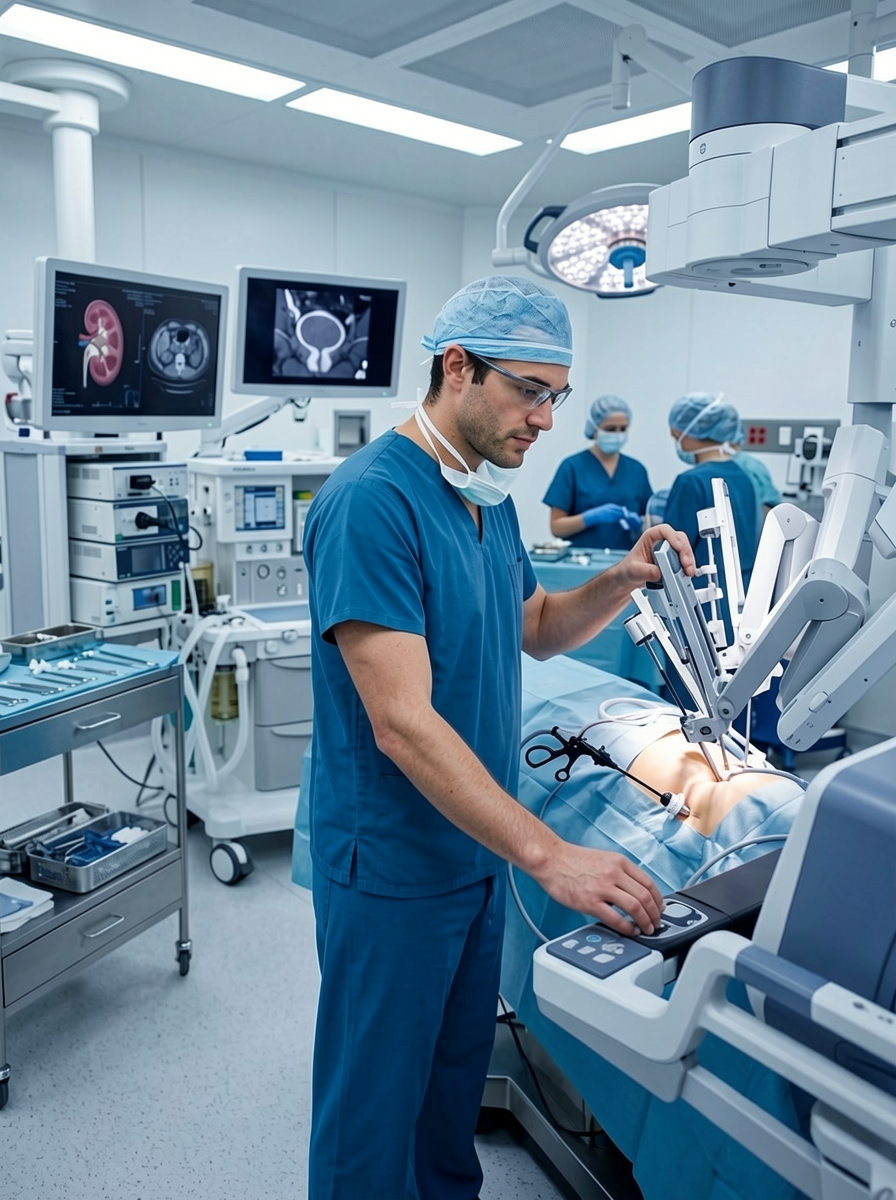
Urology is a surgical specialty focused on the diagnosis and treatment of diseases of the urinary tract in both men and women, and the male reproductive system. It is one of the most procedurally diverse fields in medicine — blending office-based clinical medicine, advanced endoscopy, robotic surgery, open reconstruction, and oncologic surgery within a single specialty.
A urologist may manage kidney stones, urinary incontinence, prostate cancer, bladder tumors, male infertility, and complex pelvic reconstruction across a patient’s lifetime. Subspecialties include urologic oncology (prostate, bladder, kidney, testicular cancers), female pelvic medicine and reconstructive surgery, pediatric urology, male infertility and andrology, endourology, neurourology, and transplant urology.
Why urology attracts competitive applicants: Few surgical fields offer the same breadth — from minor office procedures to complex robotic oncologic surgery — combined with long-term patient relationships. For IMGs committed to surgical training, urology offers a uniquely diverse career. The competitiveness of the residency matching process reflects that appeal.
Urology Residency Length and Program Types: What IMGs Must Know
Urology residency is 6 years. The single most important structural distinction for IMGs in the matching process is whether a program is categorical or advanced.
Critical for IMGs: If you match an advanced urology position but fail to secure the preliminary surgery year, you cannot begin the program. Confirm every program’s type before applying and plan both NRMP and SAU match registrations accordingly.
After completing residency, many urologists pursue an additional 1–2 year fellowship in a subspecialty, though it is not required to practice general urology.
How Many ACGME-Accredited Urology Residency Programs Exist?
As of the 2025–2026 academic year, there are 155 ACGME-accredited urology residency programs in the United States. These range from major academic medical centers — Johns Hopkins, Mayo Clinic, UCLA, University of Michigan — to community-based training programs and military sites. All 155 are listed in the ACGME’s official program directory and all offer ACGME-accredited training that satisfies American Board of Urology certification requirements.
In the 2026 match cycle, 154 of 155 programs registered and participated. Of those, 152 filled every single available position. Only 2 were left with unmatched vacancies — a 99.5% institutional fill rate. Programs are not searching for applicants. IMGs are competing for a small number of spots in a system already operating at near-capacity.
📋IMGPrep Resource
Browse Customized Urology Residency Program Lists for IMGs →The Urology Match: A Completely Separate System From the NRMP
Urology residency matching does not use the NRMP Main Residency Match. This is the most important structural fact any IMG applicant must understand before beginning the process.
Urology runs its own independent match through the Society of Academic Urologists (SAU) in collaboration with the AUA (American Urological Association). The matching algorithm, timeline, registration portal, and rank list system are entirely separate from the NRMP. However, urology does use ERAS (Electronic Residency Application Service) for the application itself — your personal statement, letters of recommendation, CV, transcripts, and USMLE scores are all submitted through the standard ERAS platform that other specialties use.
Key Structural Differences for IMG Applicants
Earlier timeline than the NRMP. In 2025–2026, applications opened September 24. Programs sent all interview offers October 24. Applicants had a 6-hour window on October 27 to accept or decline. Rank lists closed December 29. Match results were released February 2, 2026 — weeks before the NRMP’s March Match Day.
Separate registration required. You must register for the match through the SAU/AUA portal in addition to ERAS. Failing to complete SAU registration means you cannot submit a rank list, even if programs want to rank you. Many IMGs miss this step.
Preference signaling via ERAS. This is not a minor feature. It is now one of the two highest-ranked criteria program directors use when deciding whom to interview — and it is one of the highest-leverage tools available to IMG applicants. Full data is in the rubric section below.[1][7][8]
No SOAP access. If you do not match in urology, you are not entered into the NRMP’s Supplemental Offer and Acceptance Program. Unmatched positions are handled through the SAU’s own Secondary Match, which opens the day after early notification (January 28 in the 2026 cycle).
NRMP backup strategy. Because urology match results arrive before the NRMP Match Day, IMGs who registered in the NRMP for a backup specialty retain that option if they go unmatched. This requires advance registration in both systems before the application season opens in September — not after results come in February.
SAU Urology Match Timeline: 2025–2026 Completed Cycle Reference
The timeline below reflects the most recently completed urology match cycle, which concluded on February 2, 2026. It is provided as a structural reference — the sequence of events and the critical windows remain consistent from cycle to cycle, even as specific dates shift annually. IMGPrep will update this section with 2026–2027 dates as soon as they are published by the SAU.
These are past dates from the completed 2025–2026 cycle. The 2026–2027 match timeline has not yet been released by the Society of Academic Urologists. Always verify current-cycle deadlines at sauweb.org and auanet.org before applying. This page will be updated when official dates are announced.
2025–2026 completed cycle shown as reference. The 2026–2027 dates will be posted here once released by the SAU.
2026 Urology Residency Match Statistics for International Medical Graduates
Overall Match Statistics
Who Got the Spots? The IMG Reality
Of the 417 matched positions — this is the number that defines the competitive landscape for IMGs:
| Applicant Type | Matched | % of All Positions |
|---|---|---|
| US Senior Medical Students | 376 | 90.2% |
| US Previous Graduates | 28 | 6.7% |
| International Medical Students & Graduates | 13 | 3.1% |
The foundational reality for IMG residency matching in urology: US senior medical students claimed 9 out of every 10 available positions. International medical graduates filled 3.1% — 13 spots out of 417. This is not a discouragement — it is the accurate baseline that every IMG application strategy must be built around.
IMG Match Rates vs. All Applicant Types
| Applicant Type | Applied | Matched | Match Rate |
|---|---|---|---|
| Senior MD Students (US & CAN) | 396 | 342 | 86% |
| Senior DO Students (US & CAN) | 58 | 32 | 55% |
| Previous MD Graduates (US & CAN) | 44 | 25 | 57% |
| Previous DO Graduates (US & CAN) | 10 | 3 | 30% |
| International MD Students & Graduates | 20 | 8 | 40% |
| International Other Students & Graduates | 18 | 5 | 28% |
| Combined IMG Total | 38 | 13 | ~34% |
Source: Official SAU Match Day 2026 Report
The 12-point gap between international MD graduates (40%) and international other graduates (28%) reflects USMLE Step 2 CK score distributions and credential recognition — both of which function as early screening filters before applications receive holistic review.[3] Notably, international MD graduates (40%) outperformed US previous DO graduates (30%), and approached US previous MD graduates (57%). The MD credential — and the Step 2 CK profile that accompanies it — carries more weight in urology residency matching than national origin alone.
The Unmatched Pool: Where IMGs Are Overrepresented
| Applicant Type | Share of Applicant Pool | Share of Unmatched Pool |
|---|---|---|
| US Senior Medical Students | 83.3% | 61.7% |
| US Previous Graduates | 9.8% | 19.5% |
| International Medical Graduates | 6.9% | 18.8% |
IMGs were 6.9% of applicants but 18.8% of the unmatched pool — nearly three times their proportional representation. This is not random statistical noise. It reflects pre-interview filtering that removes IMG applications before holistic review begins. Understanding what triggers that filter — and what overcomes it — is what the program director rubric section below addresses directly.
The Most Important Finding for IMGs Who Do Match
Among the 13 IMGs who matched in 2026, 7 (53.8%) matched at their first-choice program — compared to 47.3% for US senior medical students. International medical graduates who reach the interview stage are genuinely competitive. The bottleneck in urology residency matching for IMGs is not interview performance — it is interview access.
Urology Match Application Statistics: What the 2026 Data Reveals for IMG Applicants
Programs receive an average of 182 applications and extend roughly 40 interviews — an offer rate of approximately 22% across all applicant types. For IMGs, the effective offer rate is substantially lower given their disproportionate representation in the unmatched pool. The compensating factor is application volume and interview attendance.
This is the clearest predictor in the 2026 dataset. An applicant who ranked only 6 programs either received very few interviews or chose not to attend all of them. For IMG residency matching in urology, both represent avoidable errors. Every interview not attended and every program not ranked forecloses a matching path.
🎯IMGPrep Resource
Residency Interview Questions: How IMGs Should Prepare and What to Expect →USMLE Requirements for the Urology Residency Match: What the 2026 Data Shows
| Highest USMLE Step Completed | Matched Applicants | Percentage |
|---|---|---|
| Step 2 CK (Clinical Knowledge) | 349 | 83.7% |
| Step 1 only | 52 | 12.5% |
| Step 3 | 2 | 0.5% |
| No steps reported | 11 | 2.6% |
Step 3 is effectively irrelevant to urology residency matching — only 0.5% of matched applicants had completed it. Step 2 CK is the operative metric, for reasons the program director data makes explicit in the section below.[3]
For IMGs specifically, Step 2 CK also functions as a credential-equivalence signal — one of the few metrics that places an international medical graduate on a directly comparable footing with US graduates in program director screening. This dual function makes Step 2 CK optimization the single highest-return standardized testing investment for IMG applicants.[3]
The Program Director Rubric: What Peer-Reviewed Research Shows About Urology Residency Matching
This section draws exclusively from peer-reviewed program director surveys published between 2022 and 2026. These studies represent the closest available documentation of how urology programs actually evaluate applicants — and they reveal structural challenges and strategic opportunities that are specific to IMGs.
The Ranked Criteria Program Directors Use to Select Whom to Interview
A 2025 survey of urology program directors published in Urology Practice (Wu et al.) rated 26 factors across four evaluation domains on a 1–10 scale.[9] The SAU Program Director Survey (Creswell et al., Urology, 2025) — tracking approximately 89 program directors annually from 2022 to 2024 — confirmed and extended these findings.[2]
-
1
Urology-specific letters of recommendation
The highest-weighted criterion across multiple independent surveys. Specificity — detailed description of clinical performance, operative engagement, and surgical aptitude — is what differentiates effective letters from those that do not influence decisions.[6][9]
8.58 / 10 -
2
Preference signals sent to the program
88% of program directors use signals to screen before thorough application review. 61% send interview invitations to every applicant who signals their program. In 2025, applicants received 12.5 interviews from signaled programs versus only 1.6 from non-signaled programs.[1][7][8]
8.56 / 10 -
3
Professionalism in virtual meetings
Conduct during virtual interactions — from initial contact through the interview itself — is evaluated as a discrete, scored criterion by program directors.
7.33 / 10 -
4
Completion of a sub-internship at the program’s institution
86.8% of program directors give special consideration to applicants who completed a sub-I at their institution. Only 23% of program directors are likely to interview an applicant who neither completed a sub-internship nor sent a preference signal.[2]
7.22 / 10 -
6
USMLE Step 2 CK ≥ 250
Ranked sixth of nine academic factors — significantly lower than many applicants assume. Step 2 CK functions as a threshold screening tool, not a fine-grained ranking metric. Once cleared, research and letters dominate the evaluation.[3][9]
5.84 / 10
The structural disadvantage IMGs face in urology residency matching: Three of the top four evaluation criteria — urology-specific letters, preference signals, and sub-internships — require either prior access to a US urology department or strategic use of a system that rewards institutional relationships. IMGs face documented structural disadvantages on all three. Only 23% of program directors will interview an applicant who has addressed neither the sub-I nor the signaling criterion.[2] Understanding this is the starting point for building a competitive application.
Preference Signaling: The Numbers That Restructured Urology Residency Matching
Preference signaling was introduced in urology residency matching in 2021 and has fundamentally changed how interview offers are distributed.[8] In the 2025 cycle, 90% of applicants used all 30 available signals. The interview yield gap is now dramatic:[7]
Additionally, 80.7% of program directors now report that not receiving a preference signal from an applicant more negatively impacts the chances of extending an interview offer than it did before the signal increase.[2] The absence of a signal is no longer neutral — it carries active negative weight. For IMGs pursuing urology residency matching, preference signaling is one of the most concrete and controllable tools available to compensate for the absence of a sub-internship at a program.
One additional finding from the AAMC data cited by the AUA: 75% of program directors agreed that signals helped them identify applicants they would have otherwise overlooked — a finding with direct relevance to IMGs who risk being filtered before holistic review.[1]
Research Productivity: The Primary Academic Proxy in the Post–Step 1 Pass/Fail Era
The transition of USMLE Step 1 to pass/fail removed a primary numeric screening metric and elevated research productivity as its functional replacement.[2][3] The bibliometric literature makes the requirement concrete:
A 2026 bibliometric analysis by Yu, Bozocea, and Terris (Urology) of matched applicants in the 2024–2025 cycle found research tier strongly correlated with program rank tier.[4] Analysis of applicants matched to the top 25 programs found an average of 5.95 PubMed-indexed publications per applicant, concentrated in specialty-specific journals: Urology, Urology Practice, and Urologic Oncology.
The Jabeer et al. study (Urology, 2025) on research gap year applicants provides critical calibration.[5] Among 560 applicants across two cycles, those who took a research gap year had a median of 26 ERAS research entries versus 12 for direct applicants. Gap year applicants matched to programs with median Doximity rank 28, versus rank 56 for non-gap year applicants — while having lower Step 1 scores on average (237 vs. 244). Research productivity was trading off against standardized test scores and winning.
For international medical graduates specifically: Without the credentialing signals available to US graduates — clerkship grades from recognized US institutions, MSPE rankings, sub-I evaluations — research output is the primary academic signal programs can evaluate comparably across all applicant types. A thin publication record means the application will not survive initial screening at most programs, regardless of other strengths.[4]
USMLE Step 2 CK: A Threshold Metric, Not a Differentiator
Multiple program director surveys confirm that Step 2 CK now functions as a threshold screening tool rather than a fine-grained ranking criterion.[3][9] Only 22% of program directors considered Step 2 CK scores indicative of what makes a good resident. The ≥250 threshold ranked sixth of nine academic factors in the Wu et al. survey.
The practical implication for IMG urology residency matching: 240 is the floor, 250 is the safer target. Below 240, filtering occurs before holistic review. Above 250, additional points do not continue to improve outcomes the way they did under numeric Step 1 scoring. Above the threshold, research productivity, letters of recommendation, and preference signaling dominate program decision-making.
Letters of Recommendation: The Top-Ranked Criterion Examined
The Nosrat et al. study (Urology, 2024) reviewed 23 application variables at a single program to identify predictors of match success and subsequent fellowship or academic career outcomes. Variables included letter content, language characteristics, applicant demographics, and MSPE language.[6] The broader surgical literature is consistent: specificity of clinical description — observable conduct in the operating room, engagement with urology-specific problems, demonstrated surgical aptitude — distinguishes letters that influence ranking decisions from those that do not.
For international medical graduates, three factors govern letter quality: the author’s specialty (urologist or not), their US-based affiliation (domestic or international), and the depth of clinical observation reflected in the letter. A letter from a US urologist who observed the applicant over multiple weeks in clinic or the OR — and can speak to specialty-specific reasoning and surgical aptitude — functions very differently in program director evaluation than a letter from an internationally based physician, regardless of that physician’s standing in their own system.
What a Competitive International Medical Graduate Urology Residency Application Requires
Drawing together the 2026 match data and the peer-reviewed program director literature, the profile of a competitive IMG application in the current cycle requires all of the following:
Urology-specific letters of recommendation from US-based urologists. At minimum two of three letters from urologists. At minimum one from a US-based urologist with direct observational access to the applicant’s clinical performance. Letters must describe surgical aptitude and urology-specific engagement with specificity.[6][9]
Peer-reviewed research productivity in urology journals. PubMed-indexed publications in specialty-specific journals. Given matched applicants at top programs averaged nearly 6 publications, and research has become the primary academic proxy since Step 1 became pass/fail, publications are not supplementary — they are foundational.[4][5]
US clinical exposure at the sub-internship level. The level of access matters: formal sub-internship generates the most credible letters and the deepest institutional familiarity. Clinical observerships are a starting point but are not equivalent in program director evaluation. 86.8% of program directors give special consideration to applicants who sub-interned at their institution.[2]
Strategic preference signaling to all 30 programs. 88% of program directors use signals to screen before thorough review. 61% interview every applicant who signals their program. Signals sent to programs where the research and letter profile is competitive carry the highest conversion potential. Not sending a signal now actively reduces interview odds.[1][7]
Step 2 CK at or above the screening threshold. 240 as the floor, 250 as the safer target. Below 240, filtering occurs before holistic review. Above the threshold, research and letters are the differentiators.[3]
Rank list of 14 or more programs. The 2026 match data is unambiguous. Matched applicants averaged 14 programs on their rank lists; unmatched applicants averaged 6. Every interview attended and every program visited must be ranked.
What Happens If You Don’t Match in the Urology Residency Match?
Because urology match results arrive in early February — weeks before the NRMP Match Day — unmatched applicants have defined options and enough time to pursue them.
The SAU Secondary Match opens January 28, immediately after early notification. Programs with unfilled vacancies post them and begin reviewing applications. The window closes February 9. Secondary Match positions are limited but real — respond immediately if you go unmatched.
NRMP backup specialty. If registered in advance for the NRMP, that match remains available. General surgery is the most common backup for urology applicants because the clinical overlap is significant and the experience is directly transferable for reapplication. This requires advance registration before the urology season opens — not after results arrive.
Reapplication with targeted improvement. The 2026 data shows previous US MD graduates matched at 57% — meaningfully higher than senior DO students. The research gap year literature shows applicants who double their publication output match into significantly higher-ranked programs on reapplication, even with lower standardized test scores.[5] An unmatched year is most productive when it directly addresses the specific weakness that prevented interview offers — whether research volume, Step 2 CK, US clinical exposure depth, or the quality and specificity of available letters.
Urology Match FAQ for International Medical Graduates
Do IMGs need ECFMG certification to apply to urology residency?
What is the difference between categorical and advanced urology programs?
What USMLE Step 2 CK score do IMGs need to match into urology?
Does USMLE Step 3 matter for urology residency matching?
Are there IMG-friendly urology residency programs?
Can DO graduates match into urology residency?
Is reapplication to urology viable for IMGs?
What visa pathways are available for IMGs matching into urology?
Urology Residency Matching Key Takeaways for International Medical Graduates
- ✓The urology match runs through the SAU, not the NRMP. Uses ERAS for the application but has its own registration portal, timeline, and algorithm. Both the SAU registration and ERAS application are required. Every deadline is different from the NRMP calendar.
- ✓155 ACGME-accredited urology residency programs. The IMG residency matching strategy must reflect that number — apply to all 155.
- ✓Categorical vs. advanced programs. Categorical includes PGY-1 — one match covers full training. Advanced starts at PGY-2 and requires a separately matched NRMP preliminary surgery year. Confirm the type before applying.
- ✓The 2026 numbers are honest. 38 IMGs applied, 13 matched — 3.1% of all 417 positions. US senior MD students took 90.2%. International MD graduates matched at 40%; international other graduates at 28%.
- ✓The documented PD ranking order: (1) Urology-specific letters of recommendation, (2) Preference signals, (3) Sub-internship at the program, (4) Step 2 CK as a threshold filter. Research productivity is the primary academic proxy since Step 1 became pass/fail. [2][3][4][9]
- ✓Preference signaling is a primary screening mechanism, not a secondary tool. 12.5 interviews from signaled programs vs. 1.6 from non-signaled programs in 2025. 88% of PDs screen using signals before thorough review. Not signaling a program actively reduces interview odds. [1][7]
- ✓Only 23% of program directors will interview an applicant who neither sub-interned at their program nor sent a preference signal. For IMGs who cannot arrange a sub-I, the preference signal becomes the primary compensating mechanism. [2]
- ✓Matched applicants at top programs averaged 5.95 PubMed publications. Research gap year applicants had twice the publication output of direct applicants and matched into programs ranked twice as high. Case reports alone are insufficient. [4][5]
- ✓Step 2 CK: 240 floor, 250 target. Below 240 = filtering before holistic review. Above 250 = Step 2 CK is no longer the primary differentiator. Research, letters, and signaling take over. [3]
- ✓Rank 14+ programs. The 2026 data: matched applicants ranked 14 programs, unmatched applicants ranked 6. Every interview must be attended. Every program visited must be ranked.
- ✓IMGs who get interviews outperform US seniors at matching their first choice. 53.8% of matched IMGs got their first choice vs. 47.3% of US senior MD students. The barrier is interview access — not what happens in the interview room.
- ✓The NRMP backup requires advance registration. Register before the urology season opens. February urology results allow NRMP participation if needed — but only with prior registration.
Urology is one of the most rewarding surgical specialties in medicine — technically demanding, intellectually rich, procedurally diverse, and built around patient relationships that few surgical fields can match. For international medical graduates, the urology residency matching process is narrower than in almost any other specialty.
But narrow is not closed.
13 IMGs matched into US urology residencies in 2026. The peer-reviewed program director literature and the match data tell a consistent story about what those applications looked like: urology-specific letters from US-based faculty who could speak to clinical performance with precision, peer-reviewed research publications in specialty-specific journals, preference signals sent strategically to programs where those credentials were competitive, US clinical exposure deep enough to generate letters of genuine specificity, and rank lists long enough to give the algorithm every possible matching path.
The rubric is documented. The criteria are published. The advantage belongs to the applicant who reads the data, builds the profile it describes, and arrives at the application with every element in place — not most of them.
Research Sources & References
- 1Grauer R, Ranti D, Greene K, et al. Characterization of Applicant Preference Signals, Invitations for Interviews, and Inclusion on Match Lists for Residency Positions in Urology. JAMA Network Open. 2023;6(1):e2250974. PubMed →
- 2Creswell M, Greene K, Richstone L, et al. Trends in Urology Residency Applications: Results From The Society of Academic Urologists Program Director Survey From 2022 to 2024. Urology. 2025;198:225–231. PubMed →
- 3Rajendran S, Patel OU, Haynes W, et al. Evaluating Urology Program Directors’ Perception on Resident Application Parameters Following the Transition of USMLE Step 1 to Pass/Fail. Urology. 2024;189:144–148. PubMed →
- 4Yu A, Bozocea A, Terris MK. Quantifying Research Productivity in the 2024–2025 Urology Residency Match: A Bibliometric Analysis of Verified Publication Rates. Urology. 2026. ScienceDirect →
- 5Jabeer M, Cheema A, Barrett A, et al. Impact of Planned Research Gap Year on Urology Residency Match Success. Urology. 2025. ScienceDirect →
- 6Nosrat C, Martin-Tuite P, Jiang F, Broering J, Shindel AW. Gender Bias in Letters of Recommendation: Relevance to Urology Match Outcomes and Pursuit of Fellowship Training/Academic Career. Urology. 2024;183:281–287. PubMed →
- 7Cahill EM, Golos AM, Sterling J, et al. Preference Signaling and Success in the 2025 Urology Residency Match: Applicant and Program Director Perspectives. Urology. 2026. DOI →
- 8Traxel E, Richstone L, Brown J, et al. Preference Signaling Pilot in the Urology Match: Outcomes and Perceptions. Urology. 2022;170:27–32. PubMed →
- 9Wu K, Huang E, Thompson L, Kobashi KC. Program Directors’ Selection Criteria for Urology Residency Match in a USMLE Step 1 Pass/Fail Era. Urology Practice. 2025;12(3):298–302. PubMed →
- DSAU Match Day 2026 — Official Match Statistics. Society of Academic Urologists / American Urological Association. Released February 2, 2026.
- DACGME Urology Programs Listing, Academic Year 2025–2026. Accreditation Council for Graduate Medical Education. 155 programs confirmed April 13, 2026. ACGME Directory →